Marble vs Wood vs Glass Dining Tables: Pros, Cons and Care
Marble, wood-finish and glass dining tables compared for Edmonton homes: durability, stain resistance, care routines and which suits your household.
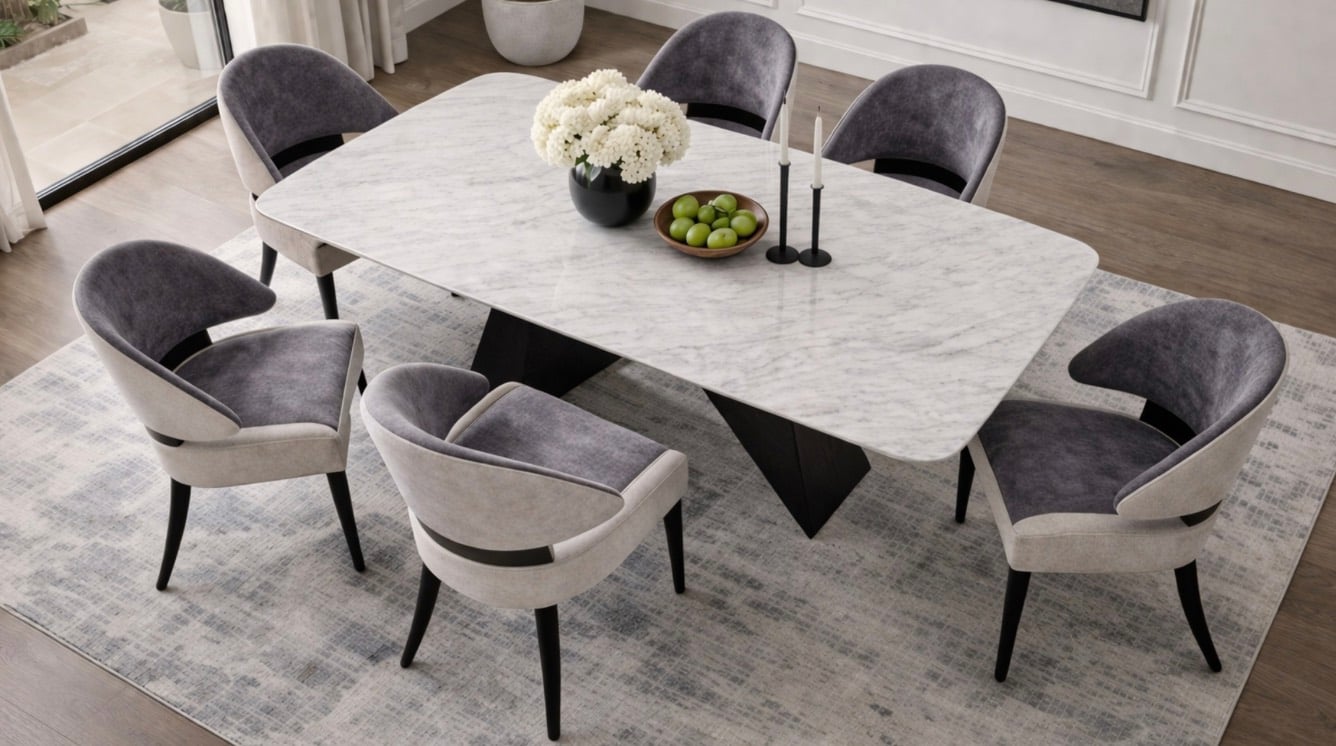
Marble, wood-finish and glass are the three tabletop materials Edmonton shoppers ask us about most, and each one changes daily life at the table in a different way - how it feels under a hot dish, how it looks after a toddler's dinner, and how much upkeep it genuinely needs once the showroom shine wears off. Before you fall for a finish because it looks stunning under gallery lighting, it helps to know what living with it actually involves.
This guide walks through each material honestly: what it is, where it shines, where it struggles, and exactly how to care for it. Browse the full range of [dining tables](/dining/dining-tables) at our Gateway Blvd showroom once you have a sense of which direction fits your household, and bring any questions with you - our team compares samples side by side every week.
What marble, wood and glass actually mean on a spec sheet
Tabletop marketing uses these words loosely, so it helps to know what is really underneath the finish before you compare.
Marble and stone-look tops cover a spectrum. Natural marble is quarried stone, and every slab is genuinely unique, with veining that no two tables share. Increasingly common alongside it are engineered stone surfaces - sintered stone and porcelain slabs - that are manufactured to imitate marble's veined look with far more consistent performance. They read as marble in a showroom but behave very differently once wine gets spilled.
Wood-finish tops range from a wood veneer over an engineered core to laminate finishes that reproduce grain and tone. A wood-look top gives a room warmth without the humidity sensitivity of a natural slab, and it is the most forgiving surface for a table that sees daily use.
Glass tops are almost always tempered glass, sometimes frosted or tinted, set into a metal or wood-finish base. Tempered glass is engineered to shatter into small, relatively blunt pieces rather than sharp shards if it ever breaks, which matters for any household with young children underfoot.
Knowing which category a table actually falls into - rather than which one it merely resembles - is the first step to picking a top you will still like in five years.
Marble and stone-look tops: pros, cons and care
Nothing else on the market has the visual presence of a genuine marble or stone-look top. Every vein is different, the surface stays cool to the touch, and a well-chosen slab reads as a centrepiece the moment guests walk into the room.
Where it shines:
- Unmatched, one-of-a-kind veining on natural slabs.
- Naturally cool and heat-tolerant, which is genuinely useful under a hot serving dish.
- A dramatic, high-end look that anchors an open-plan dining and living space.
- Engineered stone and porcelain versions bring the look with much better day-to-day resistance to stains and etching.
Where it struggles:
- Natural marble is porous. Left unsealed, it absorbs wine, oil, coffee and citrus, and those spills can leave a permanent stain within minutes if not caught quickly.
- It scratches and chips more easily than people expect for something so heavy - a dragged plate or a dropped fork can mark the surface.
- Genuine slabs are heavy, which limits where the table can sensibly be placed and makes any future move a two-person job at minimum.
- It is the highest-maintenance surface of the three, and skipping the maintenance shows.
Care routine that actually works:
- Wipe up any spill immediately by blotting, not wiping - wiping spreads the liquid across more of the porous surface instead of lifting it.
- Clean daily with a soft, dry microfiber cloth, and for grime use a small amount of pH-neutral, mild dish soap in warm water. Never reach for vinegar, lemon juice, bleach or ammonia-based cleaners; all of them etch natural stone on contact.
- Reseal the surface periodically. A sealant creates a barrier against staining, but it wears down with regular cleaning, so plan to reapply it on a schedule rather than only after a stain appears.
- For a stubborn oil stain, a stone-safe poultice can draw the oil back out of the material - this is a job worth researching properly rather than improvising with random household products.
- Always use trivets under hot cookware and coasters under drinks, even on a heat-tolerant surface, since acidic condensation is the more common culprit for etching than heat itself.
Marble and stone-look tops suit a household that entertains often, treats the table as a design statement, and is willing to build a wipe-as-you-go habit into daily life.
Wood-finish tops: pros, cons and care
Wood-finish tables are the default for a reason. They warm a room, they hide the daily wear that a busy household inevitably produces, and they pair with almost any chair style, from an upholstered dining chair to a simple wood-finish seat.
Where it shines:
- Forgiving of daily bumps, scuffs and the general chaos of family meals.
- Warm, versatile tones that suit both rustic and contemporary rooms.
- The lowest-maintenance surface of the three for a table used every single day.
- A comfortable, non-slip feel that many households simply prefer to touch.
Where it struggles:
- A wood-look surface can still show water rings from a glass left too long without a coaster, or fade slightly in direct sun over years.
- It is not heat-tolerant the way stone is - a hot dish set directly on the surface without a trivet can leave a permanent mark.
- Some finishes react to strong household cleaners, so the wrong product can dull the sheen over time.
Care routine that actually works:
- Wipe up spills promptly with a soft, damp cloth, then dry the area - standing water is the main enemy of any wood-finish surface.
- Dust regularly with a dry microfiber cloth, and clean occasionally with a cleaner made for wood or laminate finishes rather than an all-purpose spray, which can leave a cloudy residue.
- Use coasters, placemats and trivets as a habit rather than an afterthought - they prevent almost every mark a wood-finish top ever develops.
- Keep the table out of direct, all-day sun where possible, since UV exposure is the main cause of uneven fading over years of ownership.
- Avoid abrasive scouring pads entirely; they can scratch through a laminate or veneer layer in a way that is very difficult to repair.
Wood-finish tops are the right call for a household that eats at the table daily, has young children, or simply wants a surface that looks after itself while still looking warm and inviting.
Glass tops: pros, cons and care
Glass does something no other material can: it disappears. A glass top lets the room's flooring and the table's base carry the visual weight, which makes a compact dining area feel considerably larger than it is.
Where it shines:
- Opens up sightlines in a smaller dining room, condo or open-plan space.
- Reflects light rather than absorbing it, brightening a room with limited natural light.
- Tempered glass is genuinely durable against everyday scratches from cutlery and plates.
- Pairs beautifully with almost any base material - wood-finish, metal or stone - for a mixed-material look.
Where it struggles:
- Fingerprints, water spots and smudges show immediately, which means more frequent wiping than either wood or stone.
- A glass top is the most visually demanding surface to keep spotless for company, since every mark is obvious under any lighting.
- Some people find the look too cold or minimal for a warm family dining room, which is a matter of taste rather than performance.
- Tempered glass resists everyday impact well, but it is not indestructible, and a sharp, concentrated strike on an edge can still cause damage.
Care routine that actually works:
- Clean with a standard glass cleaner and a lint-free cloth, working in straight lines rather than circles to avoid streaking.
- Wipe daily if the table sees daily use - glass shows fingerprints and dust far faster than either of the other two materials, and a quick wipe keeps it looking intentional rather than neglected.
- Use felt or rubber pads under any decor placed permanently on the surface to prevent scratching from repeated contact.
- Avoid ammonia-heavy cleaners on tinted or coated glass, since some finishes can dull with repeated exposure; check the manufacturer's care note for the specific glass type.
- Handle leaves and extensions carefully - glass sections are heavier than they look and should always be lifted with two hands from the edges, never the centre.
Glass suits a household that prioritizes light and openness over warmth, entertains in a more contemporary style, and does not mind a few extra minutes of wiping before guests arrive.
Comparing the three at a glance
If you are choosing between a modern dining table in each material for the same room, here is how they stack up on the factors that matter most day to day:
- Heat resistance: marble and stone-look highest, glass moderate, wood-finish lowest.
- Stain resistance: wood-finish and glass highest, natural marble lowest without sealing.
- Scratch resistance: glass and engineered stone highest, natural marble and wood-finish moderate.
- Daily upkeep: wood-finish lowest effort, glass moderate (frequent light wiping), marble highest (sealing and prompt spill response).
- Visual statement: marble and stone-look highest, glass distinctive and airy, wood-finish warm and versatile.
- Weight and placement flexibility: wood-finish and glass easier to reposition, marble and stone the heaviest and least flexible.
None of these materials is objectively best - the right choice depends entirely on how your household actually eats, entertains and cleans.
Matching the material to how you actually live
The honest question is not which top looks best in a showroom. It is which top survives your Tuesday night dinner.
Families with young children generally do best with a wood-finish top. It hides the daily evidence of family life, tolerates the occasional dropped fork, and does not carry the etching risk that comes with juice and marble in the same room.
Households that entertain often and want a table that draws comment lean toward marble or a stone-look top, provided someone in the house is willing to build the habit of blotting spills immediately and resealing on schedule.
Smaller condos, nooks and open-plan spaces benefit most from glass, because the material's transparency does real visual work in a room that cannot afford a heavy, opaque footprint.
Pet owners should weigh scratch resistance carefully. Claws on glass or engineered stone rarely leave a mark, while a soft wood-finish surface near a jumping dog can show wear sooner.
Base, finish and the details that change the equation
The top is only half the table. The base - gold, silver, chrome or wood-finish - changes both the look and the practical footprint of the table.
A pedestal or trestle base removes the corner-leg problem entirely and gives you more usable seating positions than a four-leg design, which matters more with a heavier marble top that is harder to work around once placed.
Metal bases in gold, silver or chrome pair well with both glass and stone-look tops for a coordinated, contemporary look, while a wood-finish base suits a table meant to feel warmer and more traditional regardless of what sits on top.
If you are also furnishing the seating, our [dining chairs](/dining/dining-chairs) come in both upholstered and wipe-clean finishes - upholstered seats are more comfortable for long meals, while a hard-finish chair is easier to keep clean under a marble or glass top that already demands some upkeep.
For households weighing the same material trade-offs on a smaller surface, our guide on [coffee tables](/living-room/coffee-tables) covers marble, glass and wood-finish tops at that scale, and the two rooms often end up sharing a material language for a cohesive look.
A round dining table changes the calculation
Shape interacts with material in ways people do not always expect. A round dining table in Edmonton homes with a square or compact dining nook is a genuinely popular choice, and each material behaves a little differently in that shape.
A round marble or stone-look top spreads its visual weight evenly and tends to feel less imposing than a large rectangular slab of the same square footage. A round wood-finish table is the classic choice for a smaller family room, since the shape naturally encourages conversation and there are no corners to bump into. A round glass top is especially effective at keeping a small room feeling open, since there is no solid edge anywhere to visually shrink the space.
Whichever shape you land on, our full sizing breakdown in the [dining table size guide](/blog/dining-table-size-guide-edmonton) covers seating capacity and clearance in more depth than this material comparison does.
What a marble dining table set for six actually needs
A marble dining table set for 6 is one of our most requested combinations, and it comes with a few specific considerations worth flagging before you order. Six place settings means six chairs regularly sliding in and out, so a sealed, well-maintained surface matters even more, since the edge of the table takes repeated contact from chair backs and elbows over years of everyday meals.
Because a marble top for six seats is a substantial, heavy piece, confirm your access measurements - doorways, hallway turns and stair landings - before it ships, since a large stone top does not flex the way a smaller wood-finish table can. Our team measures this with you before delivery day so nothing arrives that cannot make it into the room.
What to bring to the showroom
Deciding between materials is much easier in person than from a photo, since finish, weight and edge detail all read differently under real light. Bring these when you visit:
- A sense of how often you host versus how often the table is used for ordinary weeknight meals.
- Whether young children or pets share the space regularly.
- Your room's natural light, since glass and stone-look surfaces both interact with light very differently than wood-finish tops do.
- Photos of chairs or decor you already own, so we can check the finish pairs well.
- Your access measurements, especially if a heavier marble or stone-look top is in consideration.
Come compare them side by side
A photograph cannot show you how cool a stone-look top feels under your hand, how a glass edge catches the light in your own dining room, or how a wood-finish grain looks next to your existing floor. Visit [our Gateway Blvd showroom](/showroom) at 5817 Gateway Blvd NW and our design team will walk you through marble, wood-finish and glass options side by side, with honest guidance on which one will actually hold up in your home. Browse the full [dining tables](/dining/dining-tables) collection online first if you like, and call (825) 404-9043 or stop in Monday to Saturday, 10:30 a.m. to 8:00 p.m., or Sunday, noon to 6:00 p.m. White-glove [delivery](/delivery) is included across Edmonton, and our team will confirm your room and access measurements before your table ever leaves the showroom.
Frequently asked questions
Which is easier to maintain: a marble, wood-finish or glass dining table?
Wood-finish tops are the lowest-maintenance of the three for daily use - a quick wipe and the occasional coaster habit is all they need. Glass needs more frequent light wiping to stay free of fingerprints and water spots, but resists stains and scratches well. Natural marble and stone-look tops need the most attention: prompt blotting of any spill and periodic resealing to keep the surface protected from wine, oil and citrus.
Does a marble dining table stain easily?
Natural marble is porous, so acidic or oily spills - wine, coffee, citrus, tomato sauce - can leave a permanent mark within minutes if left to sit. Blotting a spill immediately, rather than wiping it across the surface, and resealing the stone on a regular schedule both reduce the risk considerably. Engineered stone and porcelain surfaces that mimic marble's look resist staining far better than the natural material.
Is a glass dining table safe for homes with kids or pets?
Most glass dining tables use tempered glass, which is engineered to break into small, relatively blunt pieces rather than sharp shards if it is ever struck hard enough to fail. That makes it a reasonably safe choice for family homes, though any tabletop with an edge is worth pairing with normal supervision around toddlers. Tempered glass also resists everyday scratches from cutlery and plates well.
Can a wood-finish dining table handle hot dishes straight from the oven?
No - wood-finish tops, whether veneer or laminate, are not heat-tolerant the way a marble or stone-look surface is, and a hot dish set directly on the top can leave a permanent mark. Always use a trivet or heat-safe mat under hot cookware and serving dishes, regardless of how durable the finish otherwise is.
What is the best dining table material for a small condo or open-plan space?
Glass tends to work best in a compact or open-plan dining area, since its transparency keeps sightlines open and makes the room feel larger than an equivalent solid top would. A round glass or wood-finish table in a square nook is also a strong option, since the shape avoids wasted corner space and lets more people sit comfortably in a tight footprint.
How do you clean a glass dining table without leaving streaks?
Use a standard glass cleaner with a lint-free cloth, and wipe in straight lines rather than circular motions - circular wiping is what usually causes visible streaking. Dry the surface immediately after cleaning rather than letting it air-dry, and avoid ammonia-heavy cleaners on any tinted or coated glass, since repeated exposure can dull certain finishes over time.